Devices That Never Sleep: How Your Connected Home Quietly Sells Your Most Intimate Routines
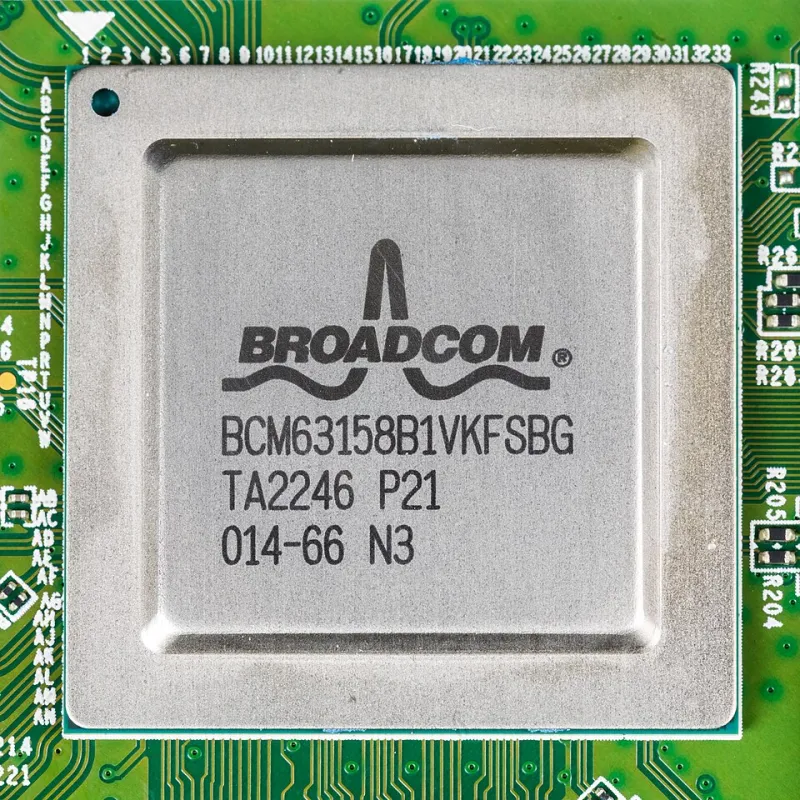
Photo: Raimond Spekking, CC BY-SA 4.0, via Wikimedia Commons
The thermostat knows when you wake up. The smart speaker catalogues what you ask about at midnight. The video doorbell logs every visitor, every departure, every pattern in your daily schedule. Taken individually, each data point seems trivial. Assembled across weeks and months, they form something far more valuable — and far more dangerous.
American households now contain an average of more than twenty connected devices, according to recent industry surveys. That number is climbing. And while manufacturers market these products as tools that work for the homeowner, a growing body of security research suggests that, in many cases, the data flows in a very different direction.
The Architecture of Ambient Surveillance
To understand how smart home devices harvest personal information, it helps to understand how they are built. Most consumer IoT products — a category that spans voice assistants, robot vacuums, smart televisions, security cameras, and connected appliances — are engineered to transmit data continuously to cloud-based servers operated by the manufacturer or a contracted third party.
This constant communication is, in part, functional. Voice assistants need cloud processing to interpret commands. Smart cameras need remote storage. But security researchers have documented a secondary layer of data collection that has little to do with product functionality.
"When we analyzed network traffic from a representative sample of popular smart home devices, we found that several were transmitting behavioral metadata — usage timing, interaction frequency, even inferred occupancy patterns — to domains associated with advertising and analytics platforms," said one independent researcher who has published extensively on IoT network behavior and spoke to DarkNet Dispatch on background. "None of that was disclosed in plain language to the consumer."
The destinations for this data are rarely the manufacturer alone. Third-party software development kits embedded in device firmware route information to analytics companies, advertising networks, and data aggregators — often under contractual arrangements that permit onward sale to brokers who compile and resell consumer profiles.
From Your Living Room to a Broker's Database
Data brokers occupy a largely invisible tier of the American information economy. They collect behavioral, demographic, and locational data from dozens of sources — loyalty programs, mobile applications, public records, and, increasingly, connected home devices — and package it into detailed consumer profiles sold to insurers, lenders, employers, and marketers.
The Federal Trade Commission has scrutinized this industry for years. A 2014 report described data broker files as containing hundreds of data points per individual, including inferred characteristics such as health conditions, financial stress indicators, and household composition. The proliferation of smart home devices has added a new and particularly intimate dimension to those profiles: the rhythm of life inside the home itself.
Consider what a comprehensive smart home data set reveals. Wake and sleep times derived from motion sensor logs. Dietary habits inferred from smart refrigerator activity. Television viewing patterns captured by automatic content recognition software embedded in smart TVs — a technology that has drawn regulatory attention in recent years after researchers demonstrated it operates even when users believe they have opted out. Conversation fragments retained by voice assistant platforms despite manufacturer assurances of deletion.
"The value of this data isn't in any single data point," explained a cybersecurity consultant who advises Fortune 500 companies on connected device risk. "It's in the longitudinal picture. A data broker who knows your routine with enough granularity can make inferences about your health, your relationships, your financial situation, and your vulnerabilities that you probably haven't shared with your doctor."
When Convenience Becomes a Liability
The commercial data-broker ecosystem is troubling enough. But security researchers point to a more acute threat: the same vulnerabilities that enable passive data harvesting can, in certain circumstances, be exploited by hostile actors.
IoT devices are notoriously difficult to secure. Manufacturers prioritize low cost and rapid time-to-market over rigorous security engineering. Firmware is frequently shipped with default credentials, unpatched software vulnerabilities, and inadequate encryption. Update mechanisms — where they exist at all — are inconsistently applied, leaving devices exposed long after known vulnerabilities have been publicly disclosed.
In documented incidents, compromised home security cameras have been accessed by stalkers and harassers. Smart locks have been manipulated through Bluetooth vulnerabilities. Voice assistant recordings have been retrieved through account-compromise attacks, exposing sensitive conversations to unauthorized parties.
The threat is not hypothetical. In 2019, a series of high-profile incidents involving a major home security camera platform demonstrated that weak credential practices and insufficient two-factor authentication protections could allow strangers to view and speak through cameras inside American homes. The manufacturer's response — emphasizing user responsibility for password hygiene — drew sharp criticism from security professionals who argued the platform's authentication architecture was the fundamental failure.
Auditing and Hardening Your Connected Home
For consumers unwilling to abandon smart home technology entirely — a realistic position, given how deeply embedded these devices have become in daily life — security researchers recommend a structured approach to reducing exposure.
Conduct a device inventory. Begin by cataloguing every connected device in your home, including products that are not obviously "smart," such as certain appliances, printers, and entertainment systems. Tools such as network scanning applications can reveal devices you may have forgotten are connected.
Segment your network. Most modern home routers support the creation of a separate guest network or IoT-specific VLAN. Placing smart home devices on an isolated network segment limits their ability to communicate with computers and phones containing sensitive data, and contains the blast radius if a device is compromised.
Change default credentials immediately. A significant proportion of IoT compromises exploit factory-default usernames and passwords that are publicly documented. Every device should be configured with a unique, complex password stored in a reputable password manager.
Disable features you do not use. Voice assistants that are not in active use should have their microphones physically muted using hardware buttons where available. Camera feeds not required for active monitoring should be powered off rather than merely deactivated in software.
Review privacy settings and data-sharing agreements. Navigate to the privacy or data-sharing sections of each manufacturer's companion application. Opt out of analytics and personalization programs wherever the option exists. Read — or at minimum skim — the data-sharing provisions of the terms of service to understand what the manufacturer claims the right to collect and share.
Keep firmware current. Enable automatic firmware updates where available, and periodically verify that updates are being applied. For devices that have reached end-of-life status and no longer receive security patches, consider replacement.
Monitor outbound traffic. Advanced users can deploy network monitoring tools — several are available as open-source software — to observe what domains their devices are contacting. Unexpected or unexplained connections to advertising or analytics platforms warrant investigation and, potentially, device-level blocking through router-based DNS filtering.
The Regulatory Gap
The United States currently lacks a comprehensive federal data privacy law governing smart home devices. Regulatory authority is fragmented across the FTC, the Consumer Product Safety Commission, and sector-specific agencies, creating gaps that manufacturers and data brokers have historically exploited.
Several states — California most prominently, through the California Consumer Privacy Act and its successor legislation — have enacted protections that apply to some smart home data practices. But enforcement remains uneven, and the technical complexity of IoT data flows makes compliance verification difficult even for regulators with adequate resources.
Legislative momentum at the federal level has been slow. Until a more coherent regulatory framework emerges, the burden of protection falls disproportionately on individual consumers — most of whom have neither the technical knowledge nor the time to fully audit the devices they have invited into their homes.
The smart home was sold as a place where technology serves the resident. For millions of American households, the transaction runs in the opposite direction.