When Your Voice Betrays You: The Dark Web's Booming Trade in Cloned Audio
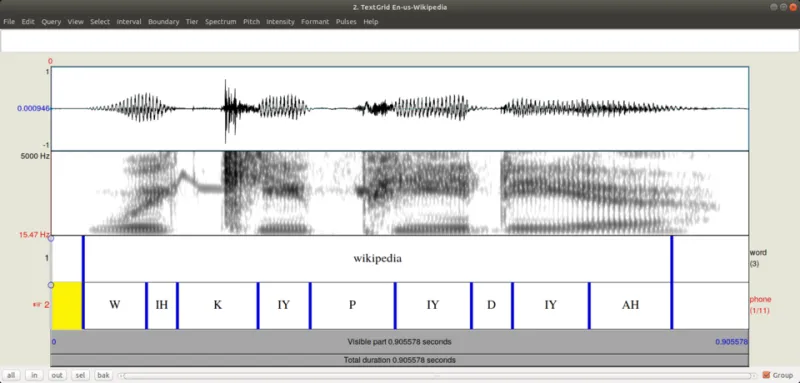
Photo: User:Wugapodes, LGPL, via Wikimedia Commons
For most Americans, a phone call from a panicked family member demanding emergency money triggers an immediate, visceral response. That urgency is precisely what a growing class of criminals is engineering — not by stealing your relatives' phones, but by stealing their voices.
Voice cloning, once the domain of well-funded film studios and government research labs, has migrated into the hands of criminal operators with alarming speed. Underground forums and dark web storefronts now advertise synthetic-audio services in much the same way that stolen credential bundles were sold a decade ago: tiered pricing, customer reviews, and money-back guarantees.
The Raw Material Is Already Out There
The first thing to understand about voice-cloning fraud is how little source audio modern systems require. Several commercially available synthesis engines — tools that were built for legitimate accessibility and entertainment applications — can generate a convincing vocal replica from as few as three to fifteen seconds of clean audio. For a criminal, that threshold is almost trivially easy to clear.
Public sources are abundant. A brief video posted to a family member's Facebook profile, a clip from a local news interview, a company earnings call archived on an investor-relations page, a podcast appearance, a YouTube tutorial — each represents a ready harvest. Automated scraping tools sold on underground markets can ingest thousands of such clips, sort them by speaker, and feed them into synthesis pipelines with minimal human intervention.
Security researchers monitoring dark web activity have documented marketplaces where synthesized voice profiles are sold as finished products, ready to be deployed by buyers who have no technical knowledge of the underlying models. The commodification mirrors the trajectory of ransomware-as-a-service: the technical work is done upstream, and the fraud itself is executed by operators who simply pay for access.
The Scams Already Reaching American Families
The Federal Trade Commission has tracked a sharp increase in what the agency categorizes as "family emergency" impersonation scams, a subset of which now involve synthetic audio. The pattern is consistent: a target receives a call from a voice that sounds unmistakably like a son, daughter, or grandchild. The caller describes an urgent crisis — a car accident, an arrest, a medical emergency abroad — and requests an immediate wire transfer or gift-card payment before the situation worsens.
Beyond families, corporate environments present an equally lucrative attack surface. Vishing — voice phishing directed at employees — has long been a staple of social-engineering campaigns. The addition of synthetic audio elevates the threat considerably. In documented cases, employees at financial institutions and logistics firms have authorized large transfers after receiving calls from voices they identified as their direct supervisors or C-suite executives. The FBI's Internet Crime Complaint Center has flagged business email compromise as one of the costliest cybercrime categories in the United States; voice-enabled variants are expected to accelerate those losses.
The psychological mechanism is straightforward. Human beings are wired to trust the voices of people they know. Cognitive shortcuts that evolved to help us navigate social relationships become liabilities when the voice on the line has been algorithmically constructed.
Why the Technical Floor Keeps Dropping
For years, voice synthesis was constrained by computational cost and the need for large training datasets. Both barriers have effectively collapsed. Consumer-grade graphics processing units can now run sophisticated neural text-to-speech models locally, without cloud infrastructure that might generate a traceable footprint. Open-source model weights — released by researchers with entirely legitimate intentions — are routinely repurposed and redistributed on underground repositories.
The resulting audio is not perfect. Careful listeners can sometimes detect unnatural cadence, slight pitch inconsistencies, or an absence of the ambient noise that characterizes a genuine phone environment. However, the quality threshold required to deceive a stressed or emotionally activated target is far lower than the threshold required to fool a trained audio forensics analyst. Criminals are not optimizing for perfection; they are optimizing for plausibility under pressure.
Detection Strategies for Individuals and Organizations
Defending against synthetic-audio fraud requires both behavioral protocols and technical awareness. The following approaches represent current best practices endorsed by cybersecurity professionals and consumer protection agencies.
Establish a family verification code. A pre-agreed word or phrase — something unlikely to appear in any public audio — can serve as an out-of-band authentication mechanism. If a caller claiming to be a family member cannot produce the code, the call should be treated as suspect regardless of how authentic the voice sounds.
Introduce deliberate friction. When receiving an urgent financial request by phone, hang up and call the person back using a number stored independently in your contacts — not a number provided by the caller. Legitimate emergencies can withstand a sixty-second delay; social-engineering attacks typically cannot.
Listen for environmental anomalies. Synthesized calls often lack the background texture of genuine calls: the faint hum of an engine, the ambient noise of a hospital waiting room, the specific acoustic signature of a familiar space. An unusually clean or sterile audio environment is worth treating as a warning sign.
Deploy organizational voice-authentication policies. Businesses handling financial transactions should require that any voice-initiated request above a defined threshold be confirmed through a second, independent channel — a secure messaging platform, a video call, or an in-person confirmation. No single-channel voice instruction should be sufficient authorization for significant fund movement.
Be skeptical of urgency itself. The emotional escalation built into these scams — the insistence that there is no time to verify, that delay will cause irreparable harm — is itself a manipulation technique. Recognizing urgency as a red flag, rather than a reason to act faster, is perhaps the single most effective countermeasure available.
A Regulatory Landscape Still Catching Up
Legislative and regulatory responses to synthetic-audio fraud remain fragmented. Several states have enacted or proposed statutes addressing deepfake content in electoral and nonconsensual intimate contexts, but comprehensive consumer-protection frameworks specifically targeting voice cloning for financial fraud are largely absent at the federal level. The FTC has issued consumer alerts and the FBI has published guidance, but neither agency yet possesses a regulatory instrument precisely calibrated to the threat.
Technology platforms that host the public audio from which voice samples are harvested face no current obligation to restrict that harvesting, and the legitimate applications of voice synthesis technology make blanket prohibition politically and practically untenable.
In the interim, the burden of defense falls disproportionately on individuals and organizations that may be entirely unaware the threat exists. Awareness, in this context, is not merely useful — it is the primary line of protection available.
The voice on the other end of the line may sound exactly like someone you love. That, increasingly, is the point.