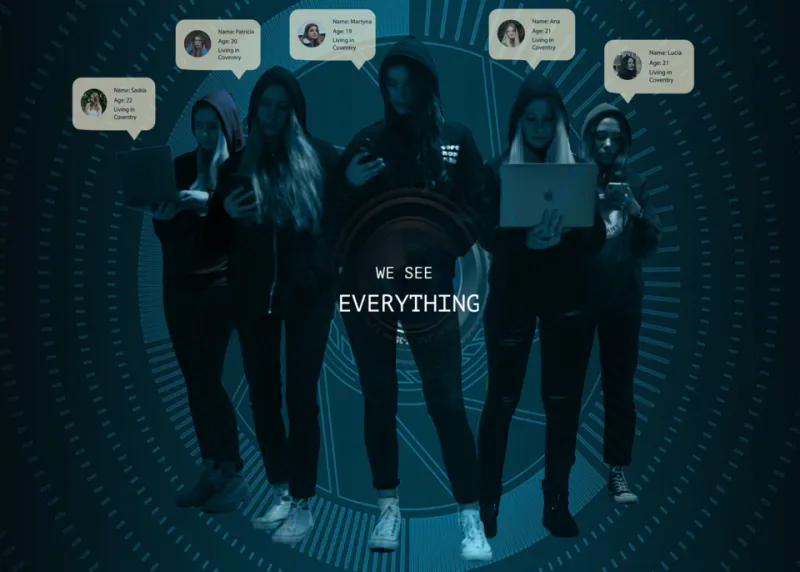
Never Truly Gone: Why Data Stolen Years Ago Still Threatens You Today
Photo: Skënder Muço, Public domain, via Wikimedia Commons
In the summer of 2012, a now-infamous breach at LinkedIn exposed the hashed passwords of roughly 6.5 million accounts. At the time, the company downplayed the incident. Four years later, the world learned the actual figure was closer to 117 million records — and that those credentials were actively trading on dark web markets for approximately five dollars per thousand entries. By then, millions of users had long since stopped thinking about it.
That pattern — initial breach, delayed exposure, renewed exploitation — has become one of the more insidious dynamics in contemporary cybercrime. Stolen data does not expire on a schedule that aligns with human memory. It accumulates, gets repackaged, cross-referenced with newer leaks, and ultimately deployed against people who believe the threat has run its course.
The Dark Web as a Long-Term Storage Facility
When a major breach occurs, the stolen data rarely floods the market immediately. Sophisticated threat actors frequently hold large credential sets in reserve, treating them as inventory to be liquidated strategically. Some datasets are warehoused for years before they surface publicly on forums or dark web marketplaces. Others circulate privately among closed groups before eventually being sold, leaked, or donated to public repositories as their commercial value diminishes.
The result is a sprawling, layered ecosystem of historical compromise data. Security researchers have documented repositories containing records from breaches spanning fifteen or more years, often aggregated into so-called "combo lists" — massive text files pairing email addresses with corresponding passwords. One such compilation, dubbed "Collection #1" when it emerged in 2019, contained approximately 773 million unique email addresses and 21 million distinct passwords drawn from thousands of separate breach events.
These repositories are not static relics. They are actively maintained, merged with newer data, and queried by automated tools that probe login portals across the internet at scale.
Why Old Data Remains Dangerous
The most straightforward reason historical breach data retains its potency is password reuse. Studies conducted by security firms consistently find that a significant majority of users recycle passwords across multiple accounts, often for years. A password harvested from a gaming forum breach in 2014 may still unlock a banking portal, a corporate email account, or a healthcare patient portal in the present day — simply because the victim never changed it.
Beyond credential stuffing, aged personal data enables a second category of attack: social engineering and targeted phishing. A threat actor armed with a victim's former address, date of birth, partial Social Security Number, and email history — all extractable from older breach records — can construct highly convincing pretexts. They may impersonate a financial institution, a government agency, or even a former employer, leveraging specific historical details to establish false credibility.
There is also the matter of aggregation. A breach from 2013 might contain a name and email address. A separate breach from 2017 might add a phone number and employer. A third event in 2021 could contribute a home address and mother's maiden name. Individually, none of these datasets is particularly alarming. Consolidated into a single profile, they constitute a detailed dossier capable of supporting identity fraud, account takeover, or targeted harassment.
How Investigators Track the Flow of Historical Data
Law enforcement agencies, including the FBI's Cyber Division and the Department of Justice's National Security Cyber Section, have increasingly focused on the marketplaces and forums that serve as distribution hubs for aged breach data. Several high-profile enforcement actions in recent years — including the seizure of RaidForums in 2022 and the subsequent dismantling of its successor platform, Breached, in 2023 — specifically targeted infrastructure used to trade historical credential sets.
Private-sector threat intelligence firms supplement these efforts by monitoring dark web repositories and alerting organizations when their users' credentials appear in circulation. Tools such as Have I Been Pwned, operated by security researcher Troy Hunt, provide a public-facing interface through which individuals can check whether their email addresses appear in known breach datasets — a resource that now indexes well over twelve billion compromised accounts.
Despite these efforts, enforcement faces a structural challenge: once data has been copied and redistributed across dozens of mirrors and private channels, removing it from circulation is effectively impossible. The objective shifts from elimination to containment and mitigation.
Determining Whether Your Data Is in Circulation
For most Americans, the starting point is accepting that some degree of personal data exposure is nearly inevitable. According to the Identity Theft Resource Center, data compromises in the United States set a record in 2023, affecting hundreds of millions of individuals across healthcare, financial services, and retail sectors alone.
Practical steps for assessing your exposure include:
Querying breach notification services. Have I Been Pwned (haveibeenpwned.com) remains the most widely trusted free resource. Entering an email address reveals which known breach events have included that address, along with the categories of data exposed. The site also offers a password checker that tests whether a specific password has appeared in any known breach dataset.
Monitoring credit and identity reports. The three major credit bureaus — Equifax, Experian, and TransUnion — are required by federal law to provide one free credit report annually through AnnualCreditReport.com. Reviewing these reports for unfamiliar accounts or inquiries can surface evidence that historical personal data is being exploited.
Enabling dark web monitoring through your existing services. Many identity protection services, credit card issuers, and even some state attorneys general offices now offer dark web monitoring that alerts consumers when their information appears in newly discovered repositories.
Practical Defenses Against Historical Compromise Data
Knowing that old breach data circulates indefinitely reframes how individuals should approach their digital hygiene. The following measures directly address the specific risks posed by historical credential and personal data exposure.
Eliminate password reuse entirely. A password manager — whether a standalone application such as Bitwarden or 1Password, or a reputable browser-integrated solution — makes it practical to maintain a unique, complex password for every account. This single change eliminates the primary vector through which aged credential data translates into active account compromise.
Audit accounts you no longer use. Dormant accounts associated with breached services frequently go unmonitored, allowing attackers to maintain persistent access undetected. Deleting unused accounts removes potential footholds and reduces the surface area of your digital identity.
Apply multi-factor authentication broadly. Even if a threat actor possesses a valid username and password from a historical breach, a second authentication factor — particularly an authenticator app rather than SMS — dramatically raises the cost of a successful intrusion.
Treat unexpected communications with structural skepticism. If a caller or email sender demonstrates knowledge of your past addresses, former employers, or other details that feel uncomfortably specific, that specificity is itself a warning sign. Historical breach data is frequently used to manufacture false familiarity. Verify the identity of any party requesting sensitive action through an independent channel before complying.
Place a security freeze on your credit files. For Americans concerned about identity fraud enabled by aggregated historical data, a credit freeze at all three major bureaus prevents new credit from being opened in their name without explicit authorization — a low-cost, high-impact safeguard that requires no ongoing maintenance.
The Uncomfortable Arithmetic of Digital Memory
Data, unlike most tools of crime, does not degrade with time. A stolen car is eventually recovered or scrapped. Counterfeit currency is removed from circulation. But a credential list or a personal record set, once exfiltrated and distributed, can persist indefinitely across servers, private channels, and offline archives that no enforcement action will ever reach.
The practical implication is that the threat surface of a breach expands rather than contracts over time, as the data finds its way into new hands, gets combined with newer exposures, and gets deployed by actors who had no connection to the original intrusion. For individuals, this demands a posture of ongoing vigilance rather than a single remedial response. The breach you read about and forgot five years ago may be the foundation of the attack you face tomorrow.