Operation Takedown: The Methodical Machinery Behind the FBI's War on Dark Web Markets
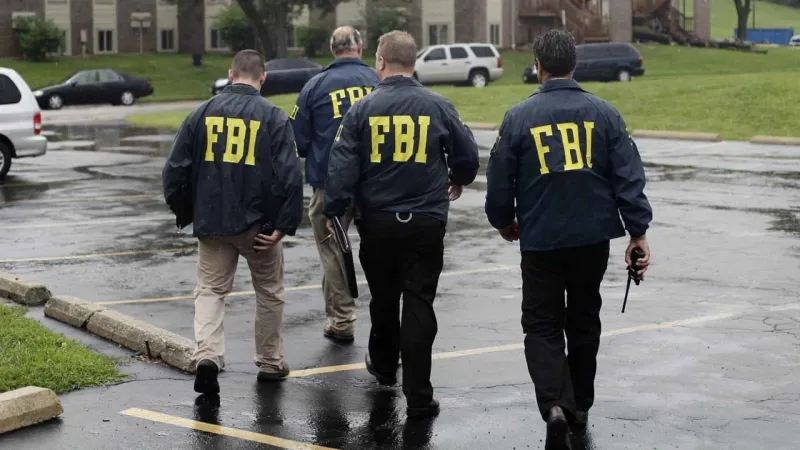
Photo: FBI cybercrime investigation dark web server seizure law enforcement digital, via wallpapers.com
The dark web has long cultivated a mythology of impenetrability — a digital underworld where anonymity is absolute and law enforcement is perpetually outmatched. The operational record of the past decade tells a considerably different story. From Silk Road to AlphaBay to Genesis Market, the FBI and its international partners have demonstrated a systematic capacity to infiltrate, identify, and dismantle even the most technically sophisticated criminal marketplaces. Understanding how they do it is a matter of genuine public interest.
The Architecture of Anonymity — and Its Limits
Dark web marketplaces typically operate as Tor hidden services, routing traffic through a layered network of encrypted relays designed to obscure both the location of the server and the identity of its users. Transactions are conducted in cryptocurrency — historically Bitcoin, increasingly privacy-focused alternatives like Monero — in an effort to sever the financial paper trail that traditional law enforcement relies upon.
On paper, this architecture presents a formidable obstacle. In practice, investigators have repeatedly demonstrated that operational security failures, not cryptographic weaknesses, are the primary mechanism by which operators are identified. Encryption protects data in transit. It does not protect against human error, metadata leakage, or the consequences of an undercover agent establishing a trusted relationship inside a criminal organization.
The Silk Road Precedent
No examination of federal dark web enforcement strategy is complete without the Silk Road case, which established the investigative template still in use today. When the FBI arrested Ross Ulbricht in a San Francisco public library in October 2013, the agency's ability to locate him was not the product of breaking Tor encryption. It was the result of painstaking open-source intelligence work.
Court records from the Southern District of New York revealed that investigators traced early promotional posts about Silk Road to a username that Ulbricht had previously used in a public forum, where he had inadvertently included his personal email address. A single operational security lapse, made years before his arrest, provided the thread that investigators spent months carefully pulling.
The case established an enduring principle in federal dark web investigations: technical anonymity is only as durable as the human discipline maintaining it. Investigators learned to be patient, methodical, and to look beyond the Tor network itself for identifying information.
The AlphaBay and Hansa Operation: A Masterclass in Coordinated Deception
If Silk Road demonstrated that dark web operators could be identified, Operation Bayonet — the coordinated 2017 takedown of AlphaBay and Hansa Market — demonstrated that they could be systematically deceived on a global scale.
AlphaBay, at its peak the largest dark web marketplace in operation, was seized by the Justice Department in coordination with Europol and law enforcement agencies across multiple nations. Its administrator, Alexandre Cazes, was arrested in Thailand. Court documents revealed that Cazes had used a personal email address — one registered to his real name — in early AlphaBay welcome messages. Investigators also found that his server's IP address had leaked briefly through misconfigured software, a technical error that proved fatal to his anonymity.
The more operationally sophisticated element of Bayonet involved Hansa Market. After Dutch authorities quietly seized control of the platform, they operated it covertly for nearly a month before taking it offline. During that window, they collected the shipping addresses of thousands of buyers, modified the platform to capture unencrypted passwords, and gathered intelligence that seeded subsequent investigations across Europe and the United States. The operation was a deliberate exercise in using criminal infrastructure against its own users.
Digital Forensics and the Blockchain Trail
The persistent myth that cryptocurrency transactions are untraceable has been substantially eroded by the emergence of blockchain analytics as a law enforcement discipline. Companies including Chainalysis and CipherTrace — both of which hold federal contracts — have developed tools capable of clustering wallet addresses, tracing transaction flows across exchanges, and identifying the points at which pseudonymous cryptocurrency intersects with the regulated financial system.
The 2022 Justice Department seizure of approximately 3.6 billion dollars in Bitcoin linked to the 2016 Bitfinex hack demonstrated the reach of these capabilities. Investigators followed a transaction chain spanning years and thousands of wallet addresses, ultimately connecting funds to a married couple in New York. The indictment made explicit that blockchain transactions, once considered inherently private, are in fact a permanent and auditable public record.
In dark web marketplace investigations, blockchain analytics serve a complementary function alongside traditional surveillance. When a marketplace operator converts illicit proceeds through an exchange that collects identity verification documents — as most regulated exchanges operating in the United States are required to do — the financial trail can connect a pseudonymous operator to a legal identity.
International Coordination as a Force Multiplier
Modern dark web investigations rarely unfold within a single jurisdiction, and the FBI's most consequential operations have depended on sustained cooperation with foreign partners. Europol's European Cybercrime Centre has served as a coordination hub for joint operations involving agencies from Germany, the Netherlands, the United Kingdom, and beyond.
The 2023 takedown of Genesis Market, a platform specializing in stolen device credentials, involved law enforcement from seventeen countries and resulted in more than 120 arrests globally. The operation demonstrated the degree to which information sharing between agencies has matured — a capability that dark web operators, who frequently assume national borders provide practical protection, consistently underestimate.
Mutual legal assistance treaties, while sometimes slow, provide the legal framework through which server data held in foreign jurisdictions can be obtained and rendered admissible in American courts. Investigators have shown considerable patience in pursuing these channels when the intelligence value justifies the timeline.
The Persistent Human Factor
Across every major dark web takedown, a consistent pattern emerges: the decisive vulnerability is not in the technology but in the people operating it. Administrators communicate with vendors using persistent usernames. They conduct personal financial transactions through the same cryptocurrency wallets they use for operational purposes. They discuss operational details in forums that investigators monitor. They make vendor disputes that leave documentary records.
The FBI and its partners have become adept at cultivating sources within criminal communities, operating undercover personas over extended periods, and waiting for the moment when an operator's guard drops. The 2021 takedown of DarkMarket, at the time the world's largest dark web marketplace, resulted in the arrest of its alleged Australian operator in Germany — located, according to Europol, near the German-Danish border in circumstances that court documents attribute in part to real-world surveillance.
What This Means for the Broader Landscape
The operational record of federal dark web enforcement over the past decade carries a clear message: the architecture of anonymity is a tool, not a guarantee. It raises the cost of surveillance and complicates attribution, but it does not render operators invisible to a patient, well-resourced, and internationally coordinated investigative apparatus.
For the general public, the significance of this record extends beyond the criminal context. These investigations have produced a substantial body of publicly available knowledge about digital forensics, cryptocurrency tracing, and the practical limits of anonymity technology — knowledge that informs legitimate privacy research, cybersecurity policy, and the ongoing public conversation about the balance between privacy and accountability in the digital age.